Project Management
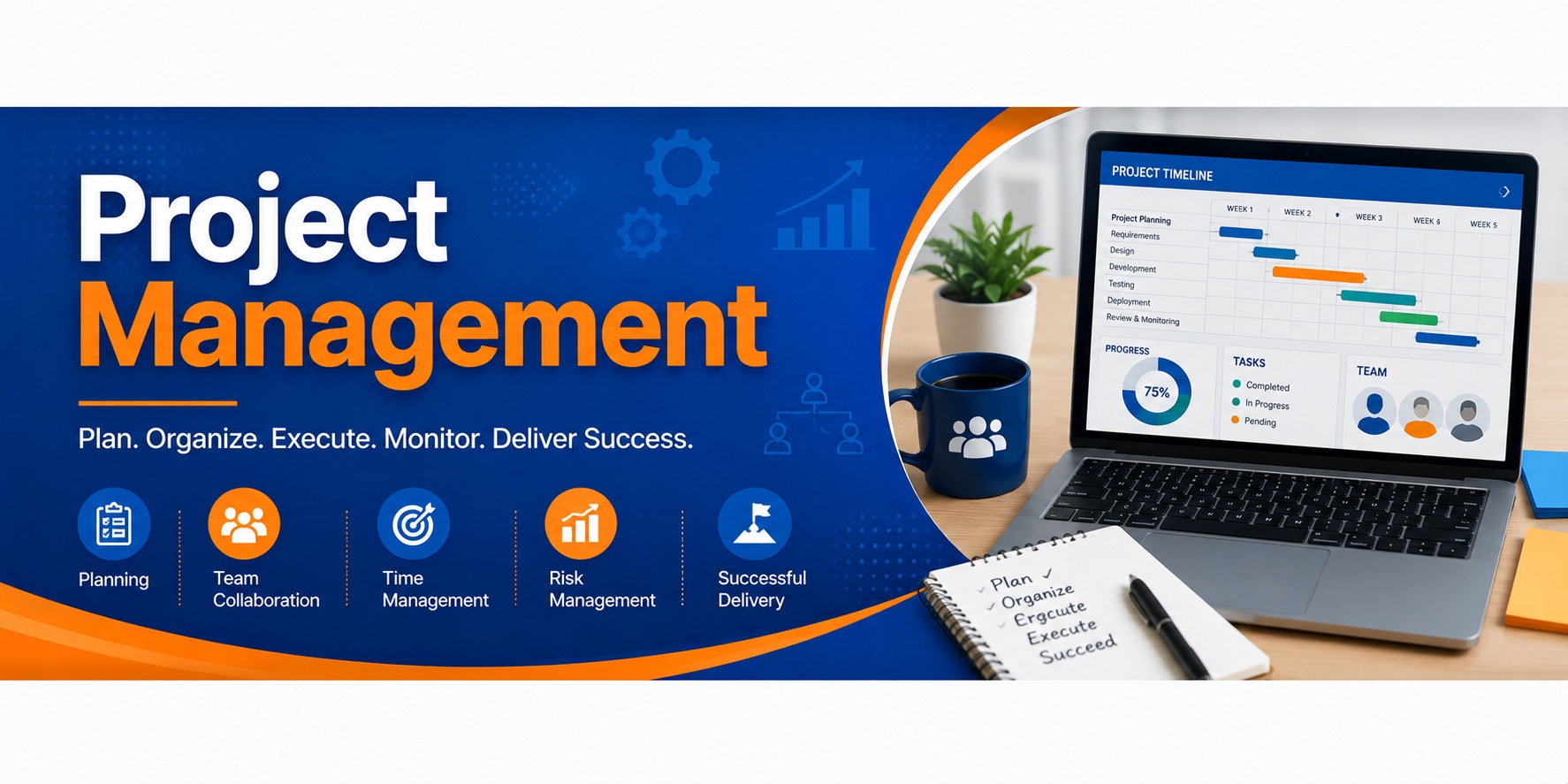
Project Management is the discipline of planning, organizing, executing, monitoring, and successfully completing projects within defined scope, time, budget, and quality requirements. It combines leadership, strategic planning, communication, and resource management to achieve organizational objectives efficiently. As businesses continue to manage increasingly complex initiatives, project management has become an essential professional skill that ensures projects are delivered successfully while minimizing risks and maximizing value.
Industries That Use Project Management
Project management expertise is highly valued across a broad range of industries, including:
-
Information Technology and Software Development
-
Construction and Engineering
-
Healthcare and Pharmaceutical Services
-
Banking, Finance, and FinTech
-
Manufacturing and Supply Chain
-
Telecommunications
-
Government and Public Administration
-
Marketing and Advertising
-
Education and Training
-
Energy and Infrastructure
Skills and Competencies Gained
Learning project management helps individuals develop essential professional abilities, including:
-
Project planning and scheduling
-
Budgeting and cost management
-
Risk assessment and mitigation
-
Leadership and team coordination
-
Stakeholder communication and engagement
-
Resource allocation and performance monitoring
-
Problem-solving and decision-making
-
Agile, Scrum, and traditional project management methodologies
Personal and Professional Benefits
Mastering project management provides numerous long-term advantages:
-
Enhanced leadership and organizational skills
-
Improved time management and productivity
-
Greater confidence in managing teams and resources
-
Increased career advancement opportunities
-
Higher efficiency in achieving business objectives
-
Strong problem-solving and strategic thinking capabilities
Career Opportunities
Professionals with project management expertise can pursue roles such as:
-
Project Manager
-
Program Manager
-
Project Coordinator
-
Operations Manager
-
Product Manager
-
Scrum Master
-
Agile Project Manager
-
Business Analyst
-
PMO (Project Management Office) Specialist
-
Portfolio Manager
How to Excel in Project Management
To succeed in this field, professionals should:
-
Earn globally recognized certifications such as PMP, PRINCE2, CAPM, or Certified ScrumMaster (CSM)
-
Gain practical experience by managing real-world projects
-
Master project management software and collaboration tools
-
Strengthen leadership, negotiation, and communication skills
-
Follow industry best practices and governance frameworks
-
Continuously update knowledge of Agile, Lean, and hybrid methodologies
-
Learn from project reviews and continuously improve processes
Future Scope
The global demand for project management professionals continues to grow as organizations invest in digital transformation, infrastructure development, technology innovation, and business expansion. Companies increasingly seek skilled project leaders who can deliver successful outcomes in dynamic environments. With strong employment prospects across industries and countries, Project Management remains a future-focused skill offering excellent opportunities for leadership, career progression, and long-term professional success.
