Productivity
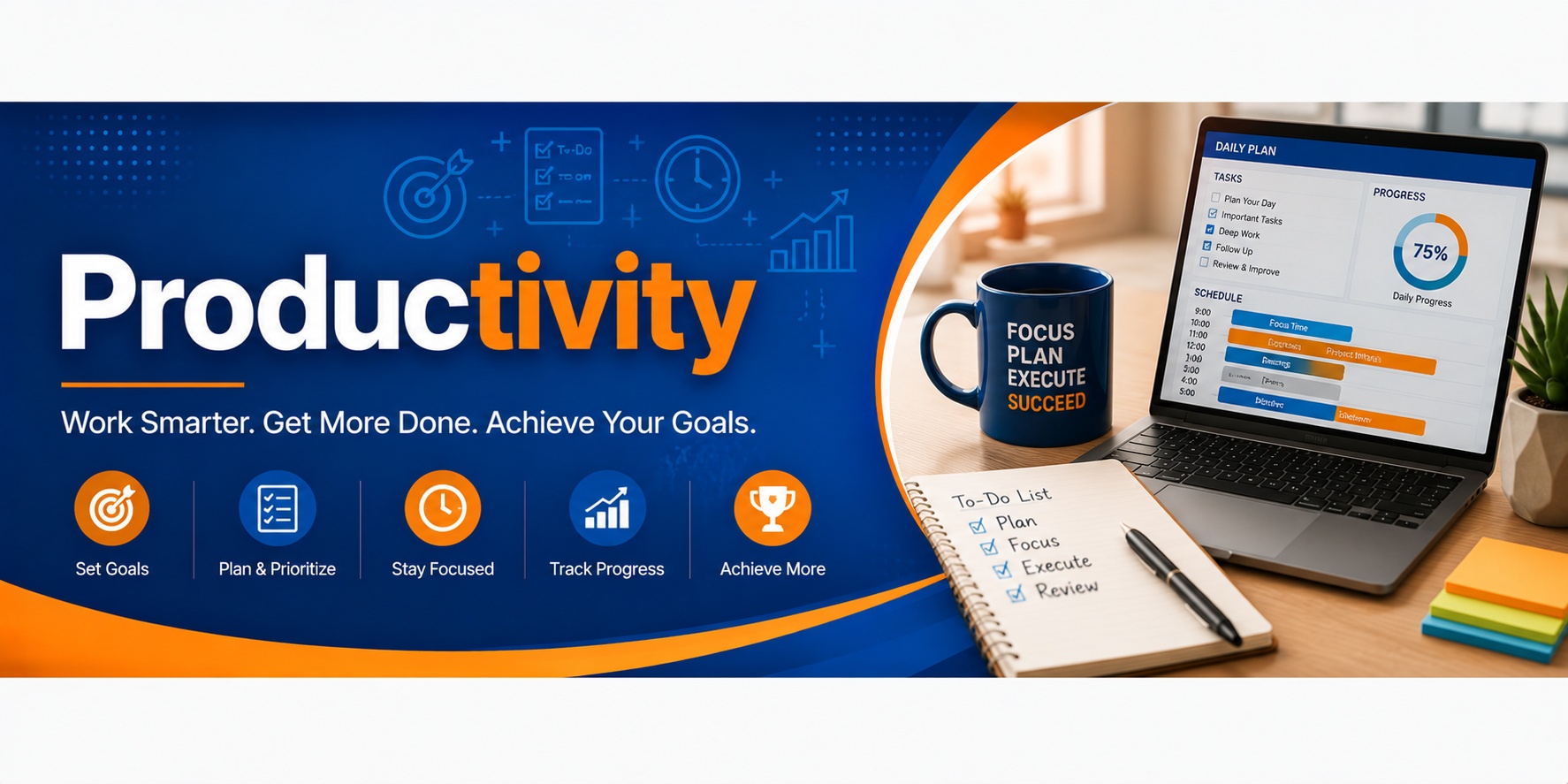
Productivity is the ability to efficiently manage time, resources, energy, and tasks to achieve goals while maintaining quality and consistency. It involves planning, prioritization, effective decision-making, and continuous improvement to maximize individual and organizational performance. In today's fast-paced and technology-driven world, productivity has become an essential professional skill that enables individuals and businesses to remain competitive, meet deadlines, and achieve sustainable success.
Industries That Use Productivity Skills
Productivity is a critical skill across virtually every industry, including:
-
Information Technology and Software Development
-
Business and Corporate Management
-
Healthcare and Medical Services
-
Education and Training
-
Manufacturing and Operations
-
Banking and Financial Services
-
Marketing and Advertising
-
Retail and E-commerce
-
Government and Public Administration
-
Consulting and Professional Services
Skills and Competencies Gained
Learning productivity techniques helps individuals develop valuable abilities, including:
-
Time management and task prioritization
-
Goal setting and strategic planning
-
Organization and workflow optimization
-
Critical thinking and decision-making
-
Problem-solving and adaptability
-
Communication and team collaboration
-
Resource management and performance tracking
-
Digital productivity and automation tool proficiency
Personal and Professional Benefits
Mastering productivity offers numerous long-term advantages, including:
-
Improved efficiency and work quality
-
Better work-life balance and reduced stress
-
Increased confidence and self-discipline
-
Enhanced focus and time utilization
-
Greater career advancement opportunities
-
Higher performance and professional credibility
Career Opportunities
Professionals with strong productivity skills can pursue roles such as:
-
Project Manager
-
Operations Manager
-
Productivity Consultant
-
Business Analyst
-
Process Improvement Specialist
-
Administrative Manager
-
Executive Assistant
-
Team Leader
-
Operations Coordinator
-
Management Consultant
How to Excel in Productivity
To become highly productive, professionals should:
-
Set clear goals and measurable performance objectives
-
Master time management and prioritization techniques
-
Utilize productivity software and digital collaboration tools
-
Continuously improve workflows through process optimization
-
Learn project management and organizational best practices
-
Participate in professional development and productivity training
-
Maintain healthy work habits and regularly evaluate performance
Future Scope
The importance of productivity continues to increase as organizations embrace digital transformation, hybrid work environments, automation, and data-driven decision-making. Employers highly value professionals who can manage responsibilities efficiently while delivering consistent, high-quality results. As technology continues to reshape the workplace, productivity will remain a fundamental skill with growing demand across global industries, providing excellent opportunities for career advancement, leadership, and long-term professional success.
